

.

This programme examines the transformation of the international order and the power dynamics shaping global affairs. It focuses on regional power competition, geoeconomic instruments and diplomatic architectures, while also exploring emerging forms of cooperation and changing regional balances. 

Regional Conflicts, Rivalries and Power Dynamics

This sub-axis examines regional conflicts, strategic rivalries and shifting balances of power. It analyses inter- and intra-state conflicts, regional power competition, strategic theatres and the positioning and projection of key actors.

Geoeconomic Competition and Influence Levers

This sub-axis explores the use of economic instruments as tools of power and influence, including sanctions, export controls, strategic investment and the weaponization of trade, financial and technological interdependencies. 

Diplomacy, Coalitions and Cooperation Models

This sub-axis examines contemporary diplomatic architectures, from multilateral institutions and minilateral formats to strategic partnerships and ad hoc coalitions. It focuses on regional cooperation, mediation, crisis management and evolving international frameworks. 

Related content

Refine by:
All
— Diplomacy, Coalitions and Cooperation Models
— Geoeconomic Competition and Influence Levers
— Regional Conflicts, Rivalries and Power Dynamics
All
Publications
— Policy Brief
Insights
— Blogs
Events
— DEFSec
Media Center
— Videos
— Podcasts
Geoeconomic Competition and Influence Levers
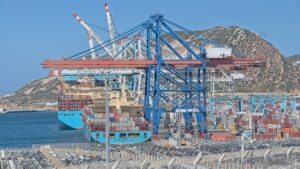
Container ship at the APM Terminals quay, Tanger Med port, Morocco

GGSF Policy Brief N°10 on Morocco maritime strategy: Tanger Med, Nador West Med and Dakhla Atlantique, the Royal Atlantic Initiative, a diversifying blue economy, undersea cables and the emerging seabed frontier. Read the key takeaways, then download the full brief.
Geoeconomic Competition and Influence Levers
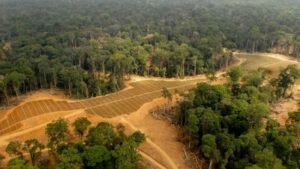
Illustration de l'article « The Calibration Problem » — données agricoles, financement du développement et Forum de Paris sur la paix.

The main constraint on agricultural investment in Africa is not a lack of capital but the quality and availability of data needed to calibrate financial instruments. Inconsistent, outdated or poorly integrated agricultural data makes it difficult to assess risk and scale successful interventions beyond pilot projects. The 50x2030 initiative addresses this gap across 28 countries…
Geoeconomic Competition and Influence Levers
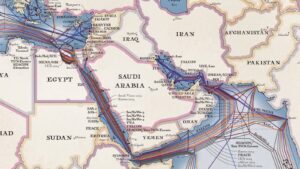
Illustration de l'article « Le péage d'Ormuz » — câbles sous-marins et infrastructures numériques stratégiques.

La proposition iranienne de taxer le passage des flux numériques sous le détroit d’Ormuz révèle le rôle stratégique croissant des infrastructures physiques d’Internet. Les câbles sous-marins deviennent des leviers de souveraineté et de puissance, tandis que les chokepoints maritimes peuvent transformer la géographie en instrument de pression. L’épisode illustre également la montée de la souveraineté…

Geoeconomic Competition and Influence Levers
Interior of the Grand Stade de Tanger during a match, Tangier, Morocco

GGSF Policy Brief N°06 on Morocco sports strategy. How fifteen years of football investment, from the 2008 Skhirat Assises to the 2030 FIFA World Cup, built influence and soft power — and where the white elephant risk lies. Read the key takeaways, then download the full brief.
Geoeconomic Competition and Influence Levers
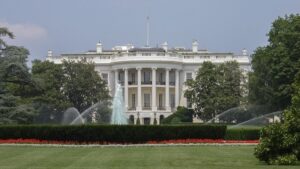
The White House, Washington, D.C.

GGSF Policy Brief N°01 on Morocco United States relations. A Moroccan-lens reading of the second Trump administration's opening months: the Sahara dossier and the 2020 recognition, Duke Buchan III's appointment, the 10% tariff against the EU's 20% and Tunisia's 28%, Chinese EV-battery investment at risk, and the push to designate the Polisario Front as an…

Comments are closed.